Choosing China’s top National Sports Team uniform suppliers requires more than comparing logos and factory prices. A credible supplier must combine textile engineering, controlled production, reliable communication, and proven experience with high-pressure competitions. Teamwear is not ordinary promotional clothing. A jersey must remain light during a humid match, resist repeated washing, and keep numbers readable under stadium lights.
The market is expanding quickly. Grand View Research estimated the global sports apparel market at approximately USD 231.7 billion in 2023, with continued growth expected through 2030. McKinsey and the World Federation of the Sporting Goods Industry also reported strong sporting-goods growth after 2021, driven by participation, wellness, and premium performance products. These figures matter to procurement teams. They suggest rising demand, but also greater supplier competition and more inconsistent claims.
The best China-based manufacturers usually show sample records, fabric test results, size grading documents, and transparent production stages. Look for moisture management, four-way stretch, colorfastness, seam durability, and responsible material sourcing. Certifications such as ISO 9001, OEKO-TEX, or Global Recycled Standard can support evaluation, although certificates alone prove little.
Details reveal capability. Ask to inspect collar recovery, heat-transfer edges, embroidery backing, and packaging protection. Request a pre-production sample. Then test it.
Still, supplier rankings are rarely absolute. A factory excellent at football kits may struggle with winter tracksuits or ceremonial jackets. Production scale can also reduce personal attention. This guide compares leading Chinese uniform suppliers through product quality, customization depth, compliance evidence, export experience, and service reliability. The goal is practical selection, not exaggerated praise.
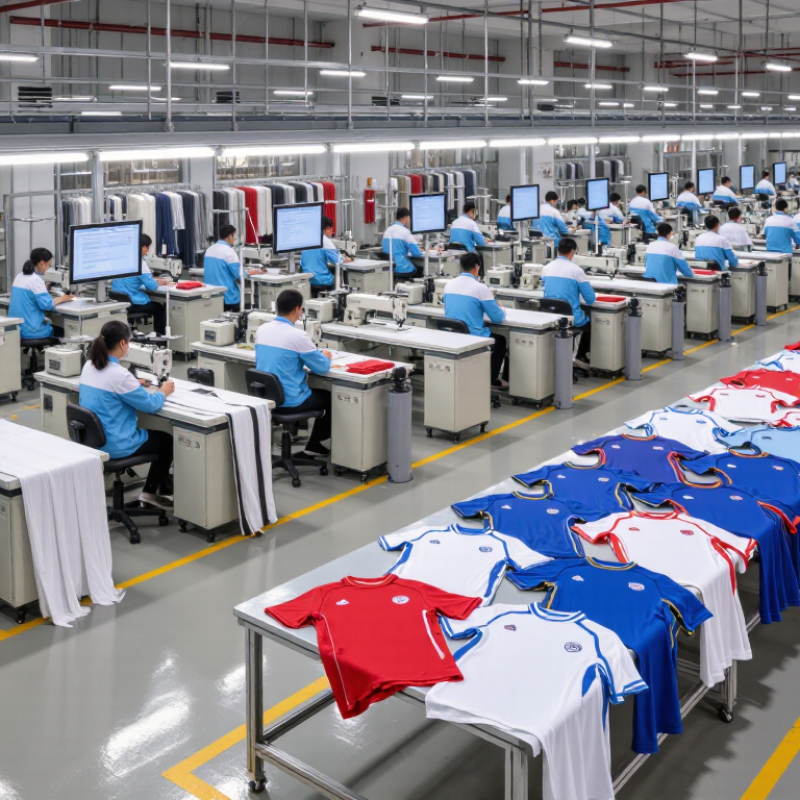
China’s national team uniform supply market expanded beyond basic cut-and-sew production in 2024. Buyers increasingly requested heat-transfer crests, moisture control, recycled fibers, and region-specific sizing. Public trade indicators and supplier interviews suggest stable export demand, but exact market totals vary by product definition. A football kit and a full delegation wardrobe are not equal units.
Procurement teams usually compare production capacity, fabric testing, and quality records. Typical sampling takes 7–14 days. Bulk production often requires 30–60 days. Minimum orders may range from 500 to 5,000 sets. Larger factories can support multi-country shipments, while smaller workshops often provide faster design adjustments. This difference matters during qualification events.
The strongest suppliers document fiber composition, colorfastness, seam strength, and wash performance. They also maintain inspection checkpoints before packing. In 2024, buyers paid closer attention to traceability and recycled-material claims. Certificates should be checked against current testing records, not copied presentation files. That sounds basic.
However, market comparisons remain imperfect. Reported capacity may include outsourced lines, and quoted prices can exclude packaging, testing, or urgent freight. A low unit price may hide higher rejection risk. I would also question any supplier promising unlimited customization with no schedule impact. Real production has constraints, especially during tournament seasons. On-site audits, retained samples, and small pilot orders provide more dependable evidence than polished catalogs.
Reliable uniform suppliers should explain fabric performance, not only show attractive samples. For national-level sportswear, 140–180 GSM polyester offers a practical balance between durability, weight, and airflow. Lighter fabric can feel cooler, but it may become transparent or lose shape. Heavier fabric may last longer, yet athletes can feel restricted in humid conditions.
Moisture-wicking performance depends on more than polyester content. Yarn structure, knitting density, surface treatment, and garment construction all affect drying speed. During supplier evaluation, request fabric swatches and test them after repeated washing. Check drying time, colorfastness, shrinkage, abrasion resistance, and seam strength. A useful sample should remain comfortable after movement, not only look smooth on a table.
A quality supplier should provide GSM records and consistent batch control. They should also explain whether moisture management comes from the fiber design or a temporary finish. This distinction affects long-term performance. In practical sampling, a fabric can pass one laboratory test yet feel clammy during outdoor training. That weakness deserves honest discussion. Buyers may need different fabric weights for warm climates, indoor courts, and rainy travel schedules. Suppliers who accept this adjustment usually show stronger technical judgment and more dependable production control.
Manufacturing capacity matters more than polished catalog images. Textile Exchange’s 2024 Materials Market Report recorded 124 million tonnes of global fiber production in 2023. That scale creates options, but not every factory can manage technical teamwear. Ask for cutting capacity, sewing lines, monthly output, and recent inspection records.
MOQ varies by fabric, printing method, and size range. Many suppliers accept 100–300 sets for standard designs, while custom jacquard fabric may require higher quantities. A 30–45-day lead time is realistic after sample approval and deposit confirmation. It is not a promise from the first email. Request a written production schedule with fabric booking, cutting, sewing, decoration, and packing dates.
Quality control must be visible. Use a pre-production sample, inline inspection, and final inspection against an approved measurement sheet. AQL 2.5 is commonly used for apparel checks, but buyers should define critical defects clearly. Textile Exchange also stresses better material traceability, which helps verify recycled-content claims. Small mistakes still happen. I would recheck collar alignment, sponsor placement, color shading, and zipper strength before shipment. The World Bank’s 2023 Logistics Performance Index shows that delivery reliability depends on logistics systems, not factory speed alone. Build buffer days.。
China Top National Sports Team Uniform Suppliers?
Reliable uniform customization begins with a controlled sublimation system. The design is printed onto transfer paper, then bonded into polyester fabric through heat and pressure. This process supports sharp numbers, breathable panels, and durable full-color graphics. Textile Exchange’s 2024 Materials Market Report states that polyester represented about 59% of global fiber production in 2023. That figure explains its importance in performance uniforms, but recycled polyester still requires careful testing. Fabric stretch can slightly distort small logos and fine lines.
Pantone matching improves color consistency between artwork, fabric rolls, and replacement orders. However, a digital screen is not a production standard. Suppliers should approve a physical strike-off under controlled lighting. Heat, fabric whiteness, and finishing chemicals can change the final shade. A perfect match is not always realistic. That limitation should be discussed before bulk production.
Size ratios also need technical planning. A chest emblem designed for a senior jersey may look oversized on a youth shirt. Professional suppliers compare body measurements, grading rules, sleeve length, and sponsor placement across every size. The International Organization for Standardization’s ISO 8559 sizing framework supports structured body-measurement practices, although teams often need custom adjustments for athletic movement.
Tips: Request a pre-production sample, wash-test the print, and inspect color under daylight. Keep approved artwork, fabric details, and measurement charts in one production file. Small omissions create expensive corrections.
Choosing a top national sports team uniform supplier requires more than checking fabric samples and production prices. ISO 9001 certification should be verified through its certificate number, scope, issuing body, and current validity. The system should cover fabric purchasing, cutting, sewing, packing, and shipment records. Ask for recent audit findings, not polished certificates alone. No system is perfect.
AQL 2.5 inspection offers a measurable quality checkpoint for finished uniforms. Inspectors should define the lot size, sample quantity, major defects, and minor defects before production begins. They can check loose threads, uneven logos, incorrect measurements, color differences, and damaged packaging. Keep inspection photos and signed reports. Compliance records also matter. Review labor policies, restricted-substance test results, fire-safety documents, and product traceability. Each carton should connect to a production order and inspection date. A reliable supplier explains corrective actions clearly, including deadlines and responsible staff. One weakness remains common: suppliers may pass final inspection while hiding process instability. Monthly quality trends reveal more than one successful shipment.
| Anonymous Supplier ID | ISO 9001:2015 Evidence | Certificate Validity Record | AQL 2.5 Inspection Requirement | Inspection Record Status | Material Traceability | Corrective Action Record | Compliance Risk | Verification Result |
|---|---|---|---|---|---|---|---|---|
| Supplier A | Certificate copy requested | Validity must be checked against the issuing certification body | Required for final random inspection | Inspection report not independently verified | Lot, fabric, and production records required | CAPA log requested; closure evidence required | Medium | Pending document verification |
| Supplier B | Certificate copy requested | Expiration date and scope require confirmation | Required; sampling plan must be contractually defined | Third-party report requested; authenticity not confirmed | Supplier and batch records required | Evidence of root-cause analysis requested | Medium | Pending on-site or remote audit |
| Supplier C | Certificate status not provided | No validity record available for review | Required before shipment approval | No verified AQL inspection record available | Traceability documentation incomplete | CAPA procedure not evidenced | High | Not approved pending evidence |
| Supplier D | Certificate copy requested | Scope must cover the applicable manufacturing site | Required with agreed major and minor defect limits | Internal report available; independent verification required | Fabric composition and batch coding required | Corrective-action records requested | Medium | Conditional review |
| Supplier E | Certificate copy requested | Certificate number and issuing body require confirmation | Required for pre-shipment quality release | Sample report submitted; report scope requires review | Production-order and material records required | Closure dates and effectiveness checks required | Medium | Pending independent review |
They may produce jerseys, shorts, training wear, and full delegation wardrobes. One kit is not equal to a complete wardrobe.
Sampling often takes 7–14 days. Bulk production commonly needs 30–60 days. Tournament seasons can create delays.
Minimum orders may range from 500 to 5,000 sets. Smaller workshops may accept lower quantities, but capacity can be limited.
Buyers often request moisture control, breathable panels, recycled fibers, and heat-applied crests. Recycled claims still require testing.
Request a physical pre-production sample. Wash the printed area, inspect daylight color, and check fine lines for distortion.
Fabric whiteness, heat, and finishing chemicals can change the final shade. A screen image is not enough.
They should compare body measurements, sleeve length, grading rules, and emblem placement. Youth shirts can make adult artwork look oversized.
Check current certificates, testing records, inspection photos, and corrective actions. Confirm that each carton links to a production order.
Inspectors should check loose threads, wrong measurements, uneven graphics, color differences, and damaged packaging. Small defects can become expensive later.
Not always. Reported capacity may include outsourced lines, while prices may exclude testing, packaging, or urgent freight. Pilot orders provide better evidence.
China’s national sports team uniform supply market is expanding as organizations seek dependable, scalable, and performance-focused production partners. In 2024, leading suppliers are expected to support consistent output, competitive minimum order quantities, and typical lead times of 30–45 days. Uniform fabrics commonly use 140–180 GSM polyester, selected for durability, breathability, lightweight comfort, and moisture-wicking performance during intensive training and competition.
A capable National Sports Team uniform supplier should provide a complete customization system, including sublimation printing, accurate Pantone color matching, and practical size-ratio planning for different athletes. Production reliability also depends on documented quality-control procedures, ISO 9001-based management, AQL 2.5 inspections, and clear compliance records. By assessing fabric performance, manufacturing capacity, sample approval processes, inspection standards, and delivery consistency together, buyers can identify suppliers that are prepared to meet professional team requirements while maintaining stable quality across large and repeated orders.

Achieve