Top 10 Summer Sports Shirts for Wholesale Buyers

Time:2026-09-27 Author:Henry
0%

Summer heat changes what buyers expect from a sports shirt. A tee that feels fine indoors can cling during a humid afternoon run. Wholesale buyers must weigh breathability, fabric weight, fit consistency, and dependable replenishment—not just a low unit price.

The opportunity is substantial, though broad market figures need context. Grand View Research valued the global sports apparel market at approximately $203.3 billion in 2023 and projected continued growth through 2030. That estimate covers sports apparel overall, not summer shirts alone. The Outdoor Industry Association reported that 175.8 million Americans participated in outdoor recreation in 2023. More activity can mean more demand for practical, warm-weather clothing, but it does not guarantee sales for every style.

Performance still matters. Nike co-founder and track coach Bill Bowerman is widely credited with saying, “If you have a body, you are an athlete.” For wholesale planning, that broad idea points toward shirts made for varied bodies and uses. Look closely at mesh placement, seam comfort, fabric feel, size grading, and color consistency across samples. Ask how a supplier handles repeat orders, too.

Small details count. A damp collar can ruin a long run. This “Top 10 Summer Sports Shirts for Wholesale Buyers” guide compares options through a practical sourcing lens. Market forecasts help frame demand; they cannot predict your customers’ preferences. Samples, wear tests, and honest feedback still matter. That is easy to overlook.
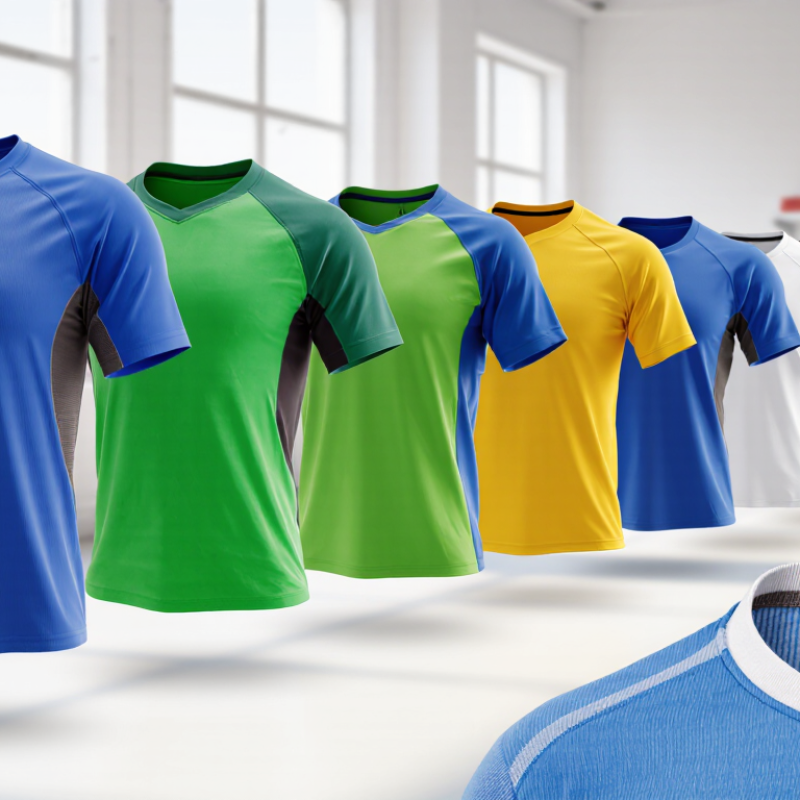
Top 10 Summer Sports Shirts for Wholesale Buyers

Define Wholesale Selection Criteria: Fabric, GSM, UPF, and Moisture Management

Top 10 Summer Sports Shirts for Wholesale Buyers

Wholesale selection starts with measurable fabric performance, not attractive color cards. Textile Exchange’s Materials Market Report 2023 reported polyester at roughly 54% of global fiber production in 2022. That scale explains its popularity, but polyester alone does not guarantee comfort. Ask for fiber content, knit structure, finishing details, and laboratory test records. A practical summer shirt often uses lightweight interlock or mesh, with enough density to prevent unwanted transparency. GSM matters, but lower is not always better. A 120 GSM shirt may feel cool, yet fail after repeated washing or intense movement.

UPF should be checked through recognized testing, rather than printed claims. UPF 30 transmits about 3.3% of ultraviolet radiation, while UPF 50 transmits about 2%, according to the protection scale used in textile testing standards. Fabric color, stretch, moisture, and laundering can change performance. Request the tested fabric state and wash-cycle conditions. Small details matter. A white, loose-knit shirt may perform differently from its laboratory sample.

Moisture management needs objective evidence. AATCC TM195 evaluates liquid spreading, absorption, and drying behavior. Look for test results covering wetting time, absorption rate, and one-way transport. Quick-dry claims can sound convincing. They are not enough. For wholesale orders, compare identical swatches after washing, then inspect cling, odor retention, and seam comfort. I would not select purely by GSM or UPF. That shortcut is tempting, but incomplete. Performance data still needs real wear testing in humid summer conditions.

Explain UPF 50+: Fabrics Transmit Less Than 2% of UV Radiation

Top 10 Summer Sports Shirts for Wholesale Buyers

UPF 50+ means the fabric transmits less than 2% of ultraviolet radiation during testing. It blocks at least 98% of measured UVA and UVB exposure. This rating differs from SPF, which applies to sunscreen. UPF measures the garment itself. The AATCC TM 183 test evaluates ultraviolet transmission through textile samples. Buyers should request test reports, fabric composition, and batch information before placing large orders. A printed claim alone is not enough.

In practical wear, dense polyester or nylon knits often support high UPF ratings. Darker colors can also reduce transmission, but color is not proof of protection. A thin white shirt may feel cooler, yet perform poorly under strong sunlight. The WHO Global Solar UV Index guide recommends protection when the index reaches 3 or above. That matters for outdoor teams, delivery crews, and summer event staff. Check seams, mesh panels, and logo areas carefully. A ventilated panel may transmit more UV than the main body fabric.

Moisture and stretching can change performance. A shirt pulled tightly across the shoulders may offer less coverage. This is an easy purchasing mistake. Ask suppliers for testing after washing, not only before production. AATCC and ASTM procedures improve comparison, but factory quality still varies. Wholesale buyers should inspect random samples, measure fabric weight, and keep test documents with each order.

Compare 10 Summer Sports Shirt Types by Fabric, Fit, and Activity

Summer sports shirts perform differently, even when they look similar on a hanger. Lightweight polyester tees suit team training and dry quickly, while open-mesh jerseys allow more airflow during outdoor games. Nylon running shirts feel smooth and resist abrasion, but may cost more. Poly-cotton training tops feel familiar and work for light exercise; pure cotton tees are comfortable, though they hold sweat. Check fabric weight and seam quality. Small details matter.

Fit should match the activity. Sleeveless tanks give lifters and court players more shoulder room. Compression tops sit close to the body for layering or focused training, but tight sizing can reduce comfort. Raglan shirts offer easier arm movement for racket sports and warm-ups. Performance polos bring a neater look to golf or coaching, with a looser fit than compression wear. Long-sleeve sun shirts add coverage for hikes and outdoor practice. Try them in motion.

For wholesale orders, compare size charts, fabric composition, and wash-test results across all ten types. Ask for samples, then check whether seams twist or colors fade after repeated washing. A breathable shirt can still feel clammy in humid weather. That part is easy to overlook. Order a size run before committing to bulk quantities, since fit varies between cuts and intended activities.

Top 10 Summer Sports Shirts for Wholesale Buyers

Compare common summer sports-shirt fabrics by indicative fabric weight, fit, and suitable activity.

Fabric weight is shown in grams per square metre (GSM). Ranges are indicative examples; actual weights vary by construction, finish, and supplier.

Shirt type Typical fit Suitable activity
Lightweight polyester jerseyRegular or athleticRunning, training
Polyester meshRelaxed or athleticTeam sports, high-intensity training
Lightweight nylon wovenRelaxedHiking, outdoor training
Polyester-spandex knitClose-fittingGym workouts, cycling
Poly-cotton jerseyRegularEveryday training, recreational sports
Merino wool jerseyRegular or athleticHiking, endurance activities
Bamboo-viscose blend jerseyRelaxed or regularLow-impact workouts, casual wear
Cotton jerseyRegular or relaxedCasual training, warm-ups
Linen-cotton blendRelaxedLeisure, low-intensity outdoor activities
Recycled polyester jerseyRegular or athleticRunning, fitness training

Assess Wicking Performance with AATCC TM195 Moisture-Management Testing

A summer sports shirt can feel dry at the collar yet cling across the back. For wholesale buyers, touch tests alone may miss that difference. AATCC TM195 evaluates liquid moisture management in textile fabrics, including wetting, absorption, spreading, and moisture movement from one side to the other. It gives teams comparable data, not a promise that every wearer will feel comfortable in every climate.

Ask the mill or testing laboratory for the fabric’s test conditions and full results, rather than a single “wicking” score. Check whether moisture spreads across the skin-facing side and moves outward, where it can evaporate. Small details matter: knit structure, yarn, finish, and fabric weight can change performance.

Numbers help. But test swatches are not finished shirts. Seams, prints, and fit may alter how a garment feels during repeated movement. Compare several production samples, and retest after laundering if wash durability matters. I have seen a tidy lab result create too much confidence; that is an easy mistake. Pair TM195 data with wear trials in warm conditions, and be clear about what the evidence does—and does not—support.

Verify Bulk-Order Specs: GSM, Size Runs, MOQ, and Test Documentation

For wholesale buyers, summer sports shirts must be checked beyond color and appearance. GSM affects breathability, opacity, and shipping weight. A 120–150 GSM knit often feels cooler, but may show more wear. Textile Exchange’s Materials Market Report 2024 states that polyester represented about 59% of global fiber production in 2023. Ask whether the fabric uses virgin or recycled content, and request composition evidence.

Ask for a complete size run, not only sample measurements. Compare chest width, body length, sleeve opening, and tolerance across every size. Grading errors can make larger shirts feel tight at the shoulders. Confirm the MOQ by color, size, and fabric, because one combined MOQ may hide separate production limits. Small orders sometimes create higher variation. That matters.

Request test documents linked to the actual production lot. Useful records include GSM results, dimensional stability after washing, colorfastness, pilling, and fabric composition. Reports should show the laboratory, test method, date, and sample identification. ISO 105 methods are widely used for colorfastness, while ISO 12945-2 covers pilling assessment. The International Apparel Federation regularly stresses traceability and quality control across textile supply chains. Ask for retesting when documents look old. Paperwork can be polished, yet incomplete. A practical inspection should also check seam strength, print adhesion, and moisture-wicking claims under the stated method. Do not accept “quick-dry” as a test result.

FAQS

Is a lower GSM always better for summer sports shirts?

No. A 120 GSM shirt may feel cool but wear out faster. Check opacity, durability, and comfort together.

What should buyers verify about UPF claims?

Request recognized test results for the fabric and its wash condition. Stretch, moisture, color, and laundering can affect performance.

How can moisture-wicking performance be assessed?

Ask for AATCC TM195 results on wetting, absorption, spreading, and moisture movement. A single “wicking” score is not enough.

Do fabric test results guarantee comfort in a finished shirt?

Not entirely. Seams, prints, and fit can change how a shirt feels during movement. Lab swatches have limits.

What should buyers inspect in a size run?

Compare chest width, body length, and sleeve opening across every size. Shoulder fit can become awkward in larger sizes.

What details should be confirmed about the MOQ?

Check minimum quantities by color, size, and fabric. One combined figure may hide separate production limits.

Which test documents are useful for bulk orders?

Request reports for GSM, shrinkage, colorfastness, pilling, and fabric composition. Check the method, test date, laboratory, and sample identification.

What should production samples be checked for?

Inspect seam comfort, print adhesion, cling, and odor retention after washing. I would still run warm-weather wear trials; paperwork can inspire too much confidence.

Conclusion

Choosing the right Summer Sports Shirt for wholesale requires more than comparing colors and prices. Buyers should evaluate fabric composition, GSM, fit, durability, breathability, and UPF protection according to the intended activity and climate. UPF 50+ fabrics transmit less than 2% of ultraviolet radiation, making them suitable for extended outdoor use when combined with responsible sun protection. This guide compares ten popular summer sports shirt types, including lightweight training, running, cycling, outdoor work, and team-oriented designs, highlighting how fabric and fit affect comfort and performance.

Moisture management is another essential consideration. Testing based on AATCC TM195 can help verify wicking, drying speed, and spreading performance instead of relying only on marketing claims. Before placing a bulk order, buyers should confirm GSM consistency, available size runs, minimum order quantities, color options, production tolerances, and supporting test documentation. A clear specification checklist reduces quality risks and helps match each shirt type with the needs of retailers, teams, and active consumers.


Henry

Henry

Henry is a dedicated marketing professional with a profound expertise in the company's offerings. With years of experience in the industry, he possesses an impressive understanding of the market dynamics and consumer behaviors that drive success. Henry is committed to sharing his insights through......